If you've found yourself wondering lately why your skin is suddenly so dry or sensitive, why you’re breaking out in your 40’s, or why you suddenly look older almost overnight, there's a good chance perimenopause could be the reason.
At BC, we’re constantly asked questions about skincare concerns like pigmentation, acne, dryness and ageing, but over the past 6 to 12 months, one question that’s come up more than almost any other is "What happens to my skin during perimenopause and menopause?"
The reality is that fluctuating hormone levels during these two stages affect almost every aspect of our skin! From hydration and firmness to sensitivity, pigmentation and more! And it can feel incredibly frustrating when the skincare routine, we've relied on for many years suddenly stops delivering the same results! But once you understand what's happening beneath the surface, it's much easier to adapt your skincare routine and choose ingredients and products that will genuinely support your skin through every stage of menopause. Here's everything you need to know.
Firstly, why does menopause affect your skin?
Oestrogen is one of the hormones responsible for keeping skin healthy, hydrated, firm and resilient! It helps to stimulate collagen and elastin production, maintain skin thickness/plumpness, improve hydration, support the skin barrier, encourage wound healing and regulate oil production.
From our mid-40s onwards (sometimes earlier), oestrogen gradually begins to decline during perimenopause before dropping significantly after menopause. In fact, studies suggest women lose around 30% of their skin's collagen during the first five years after menopause, with collagen continuing to decline at around 2% each year thereafter.
These hormonal changes explain why your skincare routine that worked beautifully in your 30s may suddenly feel ineffective!
The most common menopause-related skin changes
Dryness and dehydration
We often get women asking us, “Why is my skin so dry after 40?” Dryness and dehydration are in fact usually the very first changes that happen to our skin as we start to age and hit perimenopause. Skin that's never struggled with dryness suddenly feels tight, flaky or rough, no matter how much moisturiser you apply!
This is because as our oestrogen levels drop, oil production slows and our skin's ability to hold onto water diminishes significantly. The result is a barrier that's weaker and less able to retain hydration, leaving skin feeling persistently dry and dehydrated, even with a consistent skincare routine.
Suddenly your makeup will start to sit differently on your skin or appear patchy. Your skin will feel tight after cleansing (even though you might be using the same cleanser you’ve been using for years!) and your skin will have a “dull” look about it.
Many women describe their skin as feeling "thirsty" no matter how much moisturiser they apply. This is often because dehydrated skin needs both water and barrier-repairing ingredients, not simply a richer cream.
Sagging & Loss of Firmness
If your jawline feels softer and looks somewhat saggier, or your cheeks don't appear as “lifted” as they once did, declining collagen is usually the reason! Collagen provides structure and support to the skin, while elastin allows skin to spring back after movement. And as they start to decline, our skin becomes thinner, elasticity decreases, our facial contours soften (cue the ‘sagging’ look) and our once plumped skin feels significantly less ‘bouncy!’
This is completely normal and happens gradually throughout perimenopause and menopause.
Wrinkles
You might well have been noticing fine lines for a while now but during perimenopause and menopause many women ask why their wrinkles suddenly seem so much deeper. This isn't your imagination, it's the direct result of the dryness and collagen loss happening simultaneously!
With less collagen, less elastin and less hydration (thanks to our skin being unable to retain moisture like it once did), fine lines deepen and new wrinkles appear (especially around the eyes (cue crow’s feet), mouth and neck.)
Reduced cell turnover also means skin can appear duller and rougher, exaggerating the appearance of wrinkles. And while repeated facial expressions, UV damage and lifestyle factors continue to contribute, hormonal changes often accelerate what was already happening beneath the surface.
Hormonal acne (yes again!)
If you’ve asked yourself, “Why am I breaking out in menopause?” you wouldn’t be alone that’s for sure! Suddenly breaking out again in your 40’s and 50’s is one of the biggest surprises during perimenopause but also extremely common! And it comes down to a shift in hormonal balance rather than oestrogen alone.
As estrogen drops, androgen hormones become more dominant. This can stimulate excess oil production, leading to jawline breakouts, acne around your chin, painful hormonal cysts, congestion and enlarged pores!
Unfortunately, many women make the mistake of using harsh acne products that further damage an already weakened skin barrier. Instead, the goal is to calm inflammation while keeping skin hydrated.
To learn more about hormonal acne expert tips and the best skincare for hormonal acne click here.
Pigmentation & age spots
If you're noticing more sun spots, melasma or uneven patches than you used to, hormonal changes are playing a role here too, often alongside years of accumulated sun exposure finally becoming visible.
Oestrogen has a regulating effect on melanin production, and as levels decline, melanocytes (the cells responsible for pigment) can become more erratic, producing pigment unevenly. This is compounded by the fact that skin's natural repair and turnover processes slow down with age, meaning existing sun damage and pigmentation take longer to fade and become more entrenched over time.
Skin Sensitivity & Redness
If you’re in your 40’s and 50’s and have been asking “Why is my skin suddenly sensitive?” here’s why;
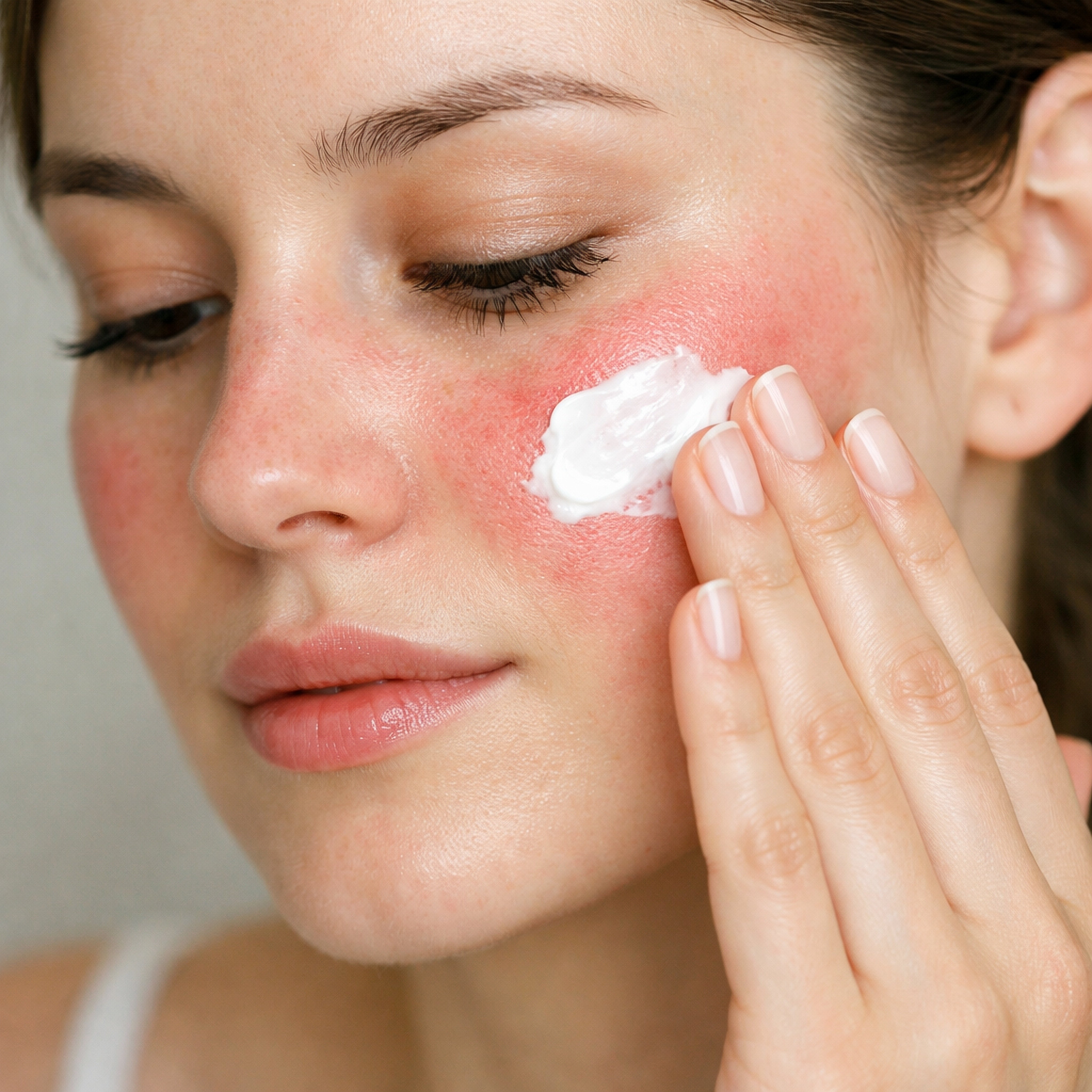
During perimenopause and menopause your moisture barrier becomes weakened as it can no longer retain hydration. A weakened moisture barrier + inflammation + dryness = skin that reacts more easily. Many women find products they once tolerated now sting or cause redness. Even women who have never had sensitive skin often develop redness, facial flushing, burning, tingling or irritation to products that were once fine during menopause.
Crepey neck and chest
If you've started noticing fine, crinkled skin on your neck or décolletage, you're not alone. In fact, these are often some of the first areas to show visible signs of perimenopause and menopause.
The skin on the neck and chest is naturally thinner than the skin on the face and contains fewer oil glands, making it more vulnerable to dryness and collagen loss.
Years of cumulative sun exposure can also start to catch up during this time, making fine lines, uneven texture and crepey skin even more noticeable.
Enlarged pores
Many women are surprised to find that their pores appear more noticeable during perimenopause and menopause, even if their skin is becoming drier. The reason isn't usually that your pores are actually getting larger. Instead, as collagen and elastin decline, the skin surrounding each pore loses firmness and support. This can cause pores to appear stretched or more visible, particularly around the nose, cheeks and chin.
Slower cell turnover can also allow dead skin cells to build up around the pore opening, making them look even more prominent. If hormonal fluctuations are causing occasional breakouts or excess oil production, congestion can exaggerate the appearance of enlarged pores further.
While you can't permanently shrink pores, you can significantly improve how they look by supporting collagen production, encouraging healthy skin renewal and keeping pores clear.
Rosacea flare-ups
If you already have rosacea, you may find that menopause makes flare-ups more frequent or more noticeable. Even women who have never experienced rosacea before can develop persistent redness and flushing!
Hot flushes (which actually affect around 75% of menopausal women) play a big role here. These sudden waves of heat trigger a rush of blood to the skin’s surface, causing temporary redness, sweating and warmth. While hot flushes don’t cause rosacea, they do amplify blood vessel dilation, which can make existing rosacea look more intense or bring underlying redness to the surface.
As oestrogen declines, the skin barrier becomes more fragile and the tiny blood vessels under the skin become increasingly reactive. Combine this with common menopause triggers such as hot flushes, stress, spicy foods, alcohol and temperature changes, and it’s easy to see why redness and inflammation become more noticeable.
The key to managing rosacea during menopause is keeping your routine simple, soothing and barrier focused. Think calming ingredients, gentle textures and minimal actives, the goal is to strengthen the skin, not overwhelm it.
Best skincare ingredients for menopause skin
Rather than chasing every trending ingredient, focus on those that address the changes happening beneath the skin.
Hyaluronic Acid
Deeply hydrates and helps skin appear plumper while reducing dehydration. Look for formulas with multiple molecular weights, which hydrate at both the surface and deeper layers of skin.
Retinol
remain one of the most effective ingredients for stimulating cell turnover, supporting collagen and improving the appearance of fine lines and pigmentation. If your skin has become more sensitive, look for encapsulated retinol or bakuchiol, which deliver similar benefits with less irritation.
Peptides
Help support collagen production and address the firmness and elasticity loss that comes with declining oestrogen. They're a gentler alternative to retinol if your skin has become more reactive.
Vitamin C
Targets pigmentation, improves radiance, boosts collagen production and protects against environmental damage.
Ceramides
help rebuild and strengthen a weakened skin barrier, locking in moisture and improving your skin's resilience against irritation and sensitivity.
Niacinamide
Is excellent for menopausal skin on multiple fronts. It strengthens the barrier, calms redness and sensitivity, regulates oil production for hormonal breakouts, and helps fade pigmentation, making it one of the most versatile ingredients for this life stage.
How to treat menopause skin
Now we’ve identified the most menopause-related skin changes, it’s time to learn how to treat it. Treating menopausal skin effectively comes down to a few key shifts in approach, rather than an entirely new routine from scratch.
1. Almost every concern above dryness, sensitivity, breakouts, even pigmentation is made worse by a compromised skin barrier. So you’ll need to strengthen your weakened skin barrier with gentle nourishing ingredients that include ceramides, peptides and niacinamide. Because your barrier is compromised it won’t be able to tolerate strong actives.
2. Hydrate deeply with ingredients like hyaluronic acid and peptides
3. Supporting collagen is a must. Use peptides daily and retinol a few nights a week (if tolerated).
4. As dark spots become more apparent, you’ll want to brighten pigmentation with vitamin c in the morning + SPF every day.
5. Treat acne and dryness as separate concerns, not contradictions. It's entirely possible to have both dehydrated skin and hormonal breakouts simultaneously. Avoid harsh, drying treatments and over exfoliation that will further compromise your barrier. Instead, look for gentle, targeted treatments alongside a hydrating, barrier-supporting routine.
6. Protect your skin with SPF every. single. day. Skin is more vulnerable to UV damage during menopause due to the thinning and weakening of its protective barrier. Daily broad-spectrum SPF is non-negotiable, both to prevent further pigmentation and to protect against accelerated collagen breakdown.
Best skincare routine for menopause skin
Because there are so many changes during perimenopause and menopause you need to create a routine that covers it all.
Morning routine
Step 1. Use a gentle hydrating cleanser
We highly recommend Pevonia Age Correction Hydrating Cleanser

Step 2. Follow with a hydrating mist if skin is feeling extra dry and dehydrated.
Try Pevonia Hyaluronic Acid HydraMist

Step 3. We highly recommend you use a good Vitamin C Serum. Just remember not all vitamin C serums are the same. They differ in their formula, strength, and how they protect your skin. A good vitamin c serum brightens your face, fades dark spots, and boosts collagen.
We love Pevonia “C” Complexe. If your goal is to target pigmentation, redness and breakouts use a niacinamide serum instead.

Step 4: Make sure you use a good, barrier supporting moisturiser rich in ceramides and collagen for additional support.
We can’t get enough of global best-seller Pevonia Age Correction Marine Collagen Cream

Step 5: Never, ever, forget your broad spectrum SPF!
Evening routine
Step 1. You can use your same hydrating cleanser you used in the morning or opt for a cream or oil cleanser to effectively remove the days grime, makeup and oil.
Try Pevonia CleanRefresh™ Foaming Oil Cleanser

Step 2. Apply a hyaluronic acid serum and alternate with a retinol serum
We love Pevonia Hyaluronic Acid Hydra Serum and Pevonia Micro-Retinol Essential Serum
 Step 3. Now you need to lock in that goodness from your serum and add extra nourishment with a rich night cream or moisturiser.
If you’re concerned more about dark spots and ageing, we highly recommend the Pevonia Micro-Retinol Essential Moisturiser. It’s perfectly nourishing, absorbs beautifully and is rich in retinol, marine collagen, hyaluronic acid and vitamin c! to leave skin smooth, silky soft and radiant.

Step 4. Finish with a nourishing face oil. This one is optional but important if your skin is feeling particularly dry and tight.
We love Pevonia Vitaminic Concentrate.

Step 5. Use a hydrating or firming mask once or twice each week to replenish moisture and give your skin an extra boost.
Try Pevonia Ageless Skin Collagen Mask. It’s rejuvenating and hydrating and infused with collagen and peptides.

Perimenopause and menopause bring big changes that’s for sure! But with the right skincare, your skin can look healthy, radiant and strong through every stage. Think of this phase not as a decline, but as a shift. Your skin simply needs different support now.